Real Estate Proposal Software: A Guide for Australian Agents
What real estate proposal software is, how it works and why Australian agents use it to win more listings. Key features, use cases and practical examples.

Real estate proposal software is a purpose-built platform that allows agents to create, send and track digital vendor proposals and listing presentations. Unlike generic document tools, real estate proposal software includes pre-structured templates for the standard listing proposal sections – CMA, marketing plan, fee structure and agent track record – and tracks whether the vendor has opened the document, how long they spent on each section, and when they last viewed it. The vendor receives a link (not a PDF attachment) and can review the proposal on any device, including their phone, before or after the listing appointment.
The way agents present their listing strategy to vendors has changed significantly in the last few years. Printed slide decks and static PDFs still exist, but a growing number of agents are using purpose-built software to create digital proposals – structured documents that combine pricing strategy, marketing plans and communication commitments in a format that works as well on a vendor's phone the following morning as it does on the kitchen table the night of the appointment.
This guide explains what real estate proposal software is, what it actually does inside the listing workflow, and what agents should expect from a purpose-built platform versus the generic document tools most start with.
What is real estate proposal software?
Real estate proposal software is a category of purpose-built digital tools that allow agents to create, deliver and manage structured listing proposals – combining property-specific content, marketing strategy, pricing rationale and communication plans into a professional digital document designed for the vendor meeting and the decision that follows it.
Real estate listing proposal software typically allows agents to:
- Create structured listing proposals with real estate-specific section templates
- Deliver proposals digitally via shareable links rather than static attachments
- Track vendor engagement – when the proposal was opened and which sections received attention
- Maintain consistent proposal quality across every appointment
- Update the document after sending without recreating it from scratch
Unlike general document tools, proposal software is built specifically for the listing process. The templates, sections and workflow are designed around what vendors need to see and what agents need to communicate – rather than requiring agents to build that structure themselves from a blank document.
Why listing proposals are moving to digital formats
The static proposal – a printed document or emailed PDF – has a fundamental limitation: it stops working the moment it leaves the agent's hands. A vendor who wants to share it with a partner has to scan or photograph it. An agent who needs to correct a figure has to recreate and resend the document. A proposal that's been sitting in an email inbox for three days looks identical to one that was just sent.
Digital proposal platforms address all of these limitations. A proposal delivered via a shareable link can be updated after it's been sent, tracked to see whether and when it's been opened, and viewed cleanly on any device. For an agent presenting to vendors who are comparing multiple agents over several days, a digital proposal that can be refreshed and re-engaged with has a structural advantage over a static document that can't.

The NAR Profile of Home Buyers and Sellers research on vendor behaviour shows that vendors regularly involve other people – partners, adult children, financial advisers – in the decision about which agent to appoint. A digital proposal that can be easily shared and reviewed by people who weren't at the listing appointment extends the reach of the agent's pitch beyond the meeting itself.
What real estate proposal software actually does
The core function of proposal software is document creation – but purpose-built platforms do more than give agents a template to fill in.
Structured content creation. Proposal software provides pre-built section templates for the core components of a listing proposal: property overview, CMA summary, marketing strategy, communication plan, fees. Agents populate the content; the platform handles formatting and presentation. This removes the document-building overhead that makes proposal preparation time-consuming when done in Word or PowerPoint.
Digital delivery and sharing. Proposals are delivered via a link rather than an attachment. This means the document is always the current version – no version control issues, no outdated PDFs in a vendor's downloads folder. Agents can update the proposal after sending and the vendor sees the updated version immediately.
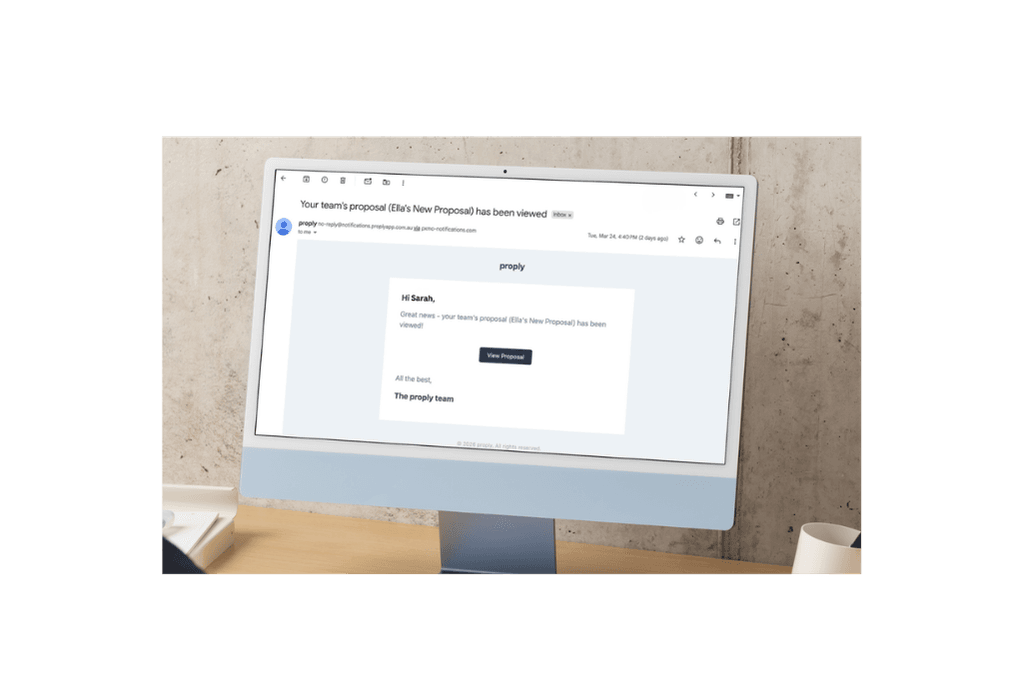
Engagement tracking. Most proposal platforms show agents when a proposal has been opened, how long the vendor spent on it, and which sections received the most attention. This information is practically useful – an agent who can see that a vendor spent twelve minutes on the pricing section and thirty seconds on the marketing plan knows exactly where to focus their follow-up conversation.
Consistency at scale. For agents managing multiple listing appointments per week, the time required to produce a polished proposal from scratch for every appointment is prohibitive. Proposal software reduces this by providing a consistent structure that agents can populate efficiently – so quality doesn't drop when volume is high.
Who makes real estate proposal software
The category is small in Australia and splits three ways.
Generalist document platforms – Proposify, PandaDoc, Better Proposals – handle proposals for any industry. Strong on templates, approvals and e-signature; no opinion about property.
CRMs with proposal features – Rex, Agentbox, VaultRE – bundle appraisal and presentation templates into a system that already holds the contacts and the pipeline.
Purpose-built real estate proposal platforms – Realtair and proply – treat the listing proposal as the product. proply is built for Australian agents specifically, covering the pre-listing proposal and the listing presentation in one structure, with local market context and AU pricing from $49 per month on an annual plan.
Agents rarely regret choosing on structure. They frequently regret choosing on price.
Core features agents should expect
Not all proposal software is built to the same standard. When evaluating platforms, agents should look for:
Real estate-specific templates. Generic proposal tools require agents to build the listing proposal structure themselves. Purpose-built platforms start with templates designed specifically for vendor-facing listing proposals – with sections for CMA, marketing strategy and communication plan already in place.
Property-level customisation. The platform should make it easy to tailor each proposal to a specific property – not just swap the address into a fixed template. Agents should be able to adjust pricing rationale, marketing recommendations and vendor context without breaking the document's structure.
Clean, professional output. Vendors form impressions from document quality. A proposal that looks polished and professional signals the same qualities about the agent. Platforms that produce well-formatted, visually clean output on any device give agents a presentation advantage.
Sharing and update capability. The ability to send a link rather than an attachment, and to update the document after sending, are the baseline features that make digital proposals more useful than static ones.
Workflow integration. The best platforms integrate with the agent's broader workflow – CRM data, property details, marketing assets – rather than requiring agents to maintain a separate data entry process just for proposals.
How proposal software fits into the listing workflow
Proposal software doesn't replace any part of the listing workflow – it makes one part of it significantly faster and more consistent. The preparation thinking still sits with the agent. The platform handles the production.
In practice, the workflow looks like this: the agent conducts the appraisal and gathers the information needed to build the proposal – comparable sales, marketing plan, fee structure. They open the platform, populate the relevant sections with property-specific content, review and refine the document, and either present it at the listing appointment or send it the same evening.
The time saving is in the production stage. An agent using a Word template spends a significant portion of proposal preparation time on formatting, layout and document assembly. Proposal software eliminates that overhead – so the agent's time goes into the strategy and content rather than the presentation.
For agents running a proposal-first selling approach – where the proposal is the centrepiece of the listing appointment rather than a follow-up document – this matters significantly. A high-quality proposal produced efficiently before every appointment is only feasible at volume when the production process is fast.
proply is built for this use case: structured, consistent proposals an agent can produce before an appraisal without starting from a blank document.
Download free – 64 pages on the proposal workflow, from software selection to vendor delivery.
Ready to see proply in action? Book a proply demo · Start your free trial
This article is part of the proply blog – practical guides for Australian agents on proposals, listing presentations and winning more listings. Explore the full series at proplyapp.com.au/blog.